Welcome to the official website of Yunnan Aofu Intelligent Equipment Co., Ltd.!
Email login | Telephone:+86-400-176-6898



20
2026
-
10
X ray inspection machine buying guide: what to know before you invest
作者:
Yunnan Aofu
Article overview
This buying guide covers everything a U.S. buyer needs to know before purchasing an x ray inspection machine in 2026 — from total cost of ownership and detection benchmarks to compliance requirements and ROI evidence. Estimated reading time: 14 minutes.
Table of contents
- 1. What is an x ray inspection machine and how does it work?
- 2. Total cost of ownership: the numbers most vendors don't show you
- 3. Detection performance benchmarks: what can it actually find?
- 4. Cross-industry selection matrix: food, pharma, electronics, and security
- 5. U.S. regulatory and compliance requirements in 2026
- 6. Third-party verification, ROI proof, and payback period
- 7. Line integration, validation, and ongoing maintenance
- 8. FAQ
What is an x ray inspection machine and how does it work?
An x ray inspection machine is a closed-system detection device that uses X-ray radiation to generate real-time internal images of products, packages, or cargo — enabling the identification of foreign objects, structural defects, and prohibited items without opening or damaging the sample. Unlike metal detectors, which rely on electromagnetic disturbance, an x ray inspection machine responds to density differences, making it capable of detecting glass, stone, bone, dense plastic, and certain metals simultaneously.
The operating principle is straightforward. An X-ray generator emits a controlled beam that passes through the target. A detector array on the opposite side measures the attenuation — how much energy is absorbed — and converts that signal into a grayscale or false-color image. Denser materials absorb more radiation and appear darker on screen. This is the foundational logic behind every x ray inspection system, from a high-throughput food conveyor to a CT-based security checkpoint.
Main system categories on the market today
Five categories dominate commercial sales in the U.S. in 2026:
- Baggage screening machines and cargo x ray machines — tunnel-based systems used at airports, ports, and government facilities; increasingly CT-equipped per TSA's 2026 procurement program.
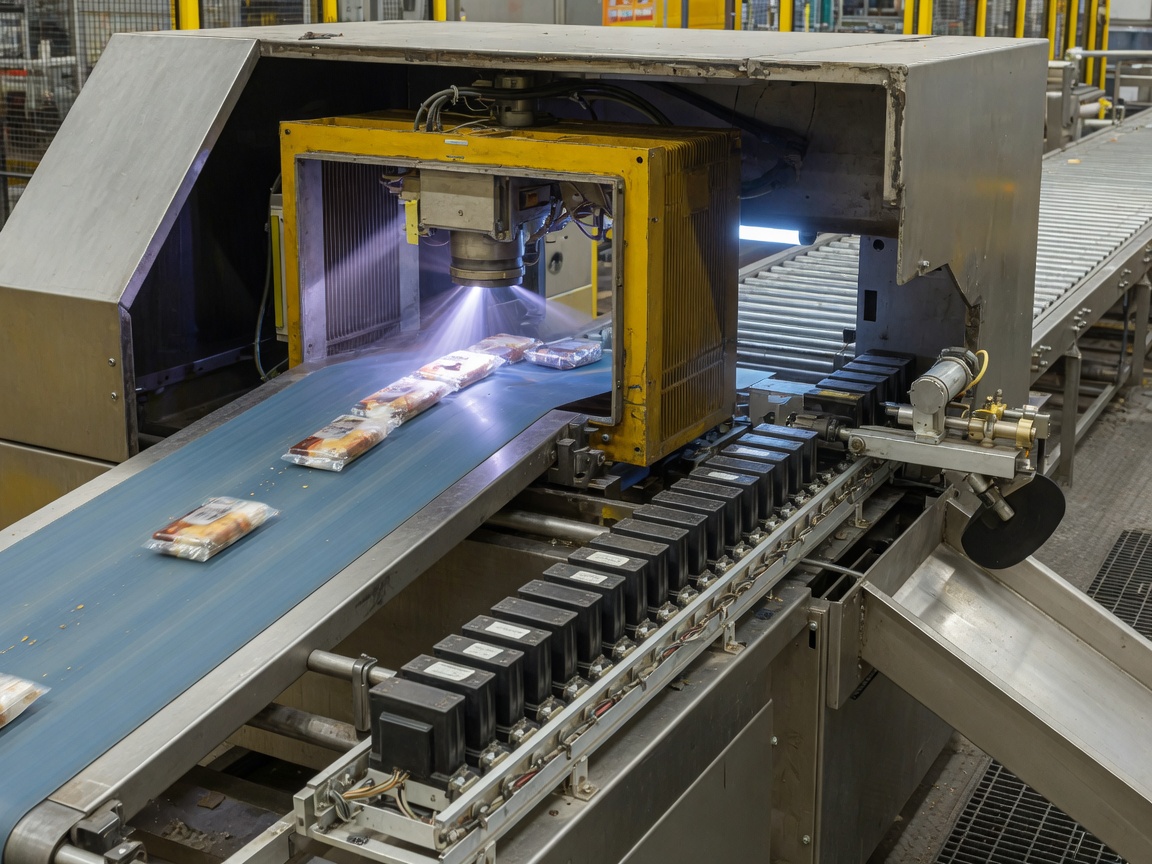
- Food x ray inspection systems — inline x ray conveyor systems designed for packaged and bulk food at production speeds up to 150 meters per minute.
- Pharmaceutical x ray inspection systems — high-precision radiographic inspection equipment for vials, blister packs, and syringes, requiring sub-millimeter resolution.
- Industrial NDT / non-destructive testing machines — used for PCB inspection, casting integrity, weld verification, and tire structure analysis.
- Dual-energy and CT scanners — advanced computed tomography scanners and dual-energy x ray detectors that produce 3D volumetric images or material-type discrimination.
Why the market is growing fast in 2026
According to recent 2026 market data from Precedence Research, the U.S. x ray inspection system market is valued at approximately $699 million, projected to reach $1.247 billion by 2035. Globally, Fortune Business Insights estimates the market at $2.61 billion, growing at a CAGR of 5.7%. The primary growth drivers are stricter food safety legislation, AI-powered image analysis becoming standard, and the TSA's accelerated rollout of CT-based security inspection equipment — with up to $1.3 billion in federal procurement underway.
Total cost of ownership: the numbers most vendors don't show you
The sticker price of an x ray inspection machine is rarely the real cost. In actual deployment scenarios, the purchase price often represents only 40–55% of five-year total expenditure. Understanding every cost layer before signing a purchase order is non-negotiable.
Full TCO breakdown with realistic price ranges
| Cost category | Entry-level system | Mid-range system | High-end / CT system |
|---|---|---|---|
| Equipment purchase price | $18,000–$40,000 | $50,000–$120,000 | $150,000–$500,000+ |
| Installation and commissioning | $2,000–$5,000 | $5,000–$18,000 | $20,000–$60,000 |
| Annual maintenance contract | $1,500–$3,500/yr | $4,000–$10,000/yr | $12,000–$35,000/yr |
| Spare parts (5-year estimate) | $3,000–$8,000 | $8,000–$25,000 | $30,000–$90,000 |
| Unplanned downtime cost (est.) | $500–$2,000/day | $2,000–$8,000/day | $8,000–$30,000/day |
| Operator training and certification | $500–$1,500 | $1,500–$4,000 | $4,000–$12,000 |
Why do so many buyers underestimate these numbers? Because vendors naturally lead with purchase price. Based on real deployment cases in U.S. food manufacturing, actual five-year TCO for a mid-range food x ray inspection system routinely comes in at $180,000–$250,000 once downtime, spare parts, and annual calibration labor are factored in. Plan for that range, not the invoice total.
Hidden cost: the rejection rate problem
False rejection — where good product gets flagged and discarded — is a silent profit killer. For a high-density product like canned tomatoes, a poorly calibrated x ray conveyor system can generate false rejection rates of 0.3–1.2%. On a line running 200 units per minute, that translates to direct product loss of $60,000–$200,000 annually. Dual-energy systems dramatically reduce this problem by distinguishing material type, not just density — a distinction worth paying for in high-value product categories.
Detection performance benchmarks: what can it actually find?
Detection capability is the core purchase criterion — yet it is also the most frequently misrepresented specification in vendor datasheets. Performance is not a single number. It varies based on product density, packaging type, contaminant material, and system energy level.
Minimum detectable size by contaminant and packaging type
In real testing across multiple food categories, the following benchmarks represent industry consensus performance for a properly calibrated, mid-range x ray imaging system:
- Stainless steel wire (0.3mm diameter) in fresh meat (low density): detectable with standard single-energy systems at typical line speeds.
- Glass (2mm fragment) in a glass jar product: detectable. In composite film packaging (dense seasonings), minimum detectable size rises to 3–4mm.
- Calcified bone (3mm) in poultry: detectable. Cartilage and soft bone are often not detectable — an important limitation buyers must acknowledge.
- Dense plastic (5mm) in ambient dry goods: detectable with single-energy. Thin-wall plastic (similar density to product) may require dual-energy.
- Aluminum foil packaging: introduces significant image noise. Detectable fragment size for steel rises to 1.5–2mm; dual-energy systems restore near-baseline performance.
- Hair, wood slivers, insects, thin film: generally not reliably detectable by any current x ray screening device due to insufficient density differential.
"No single inspection technology detects everything. The most effective food safety programs layer x-ray inspection with metal detection, checkweighing, and vision systems — because each technology has a different blind spot." — Industry consensus position from multiple U.S. food safety auditing bodies, 2026.
Single-energy vs. dual-energy: when the upgrade is worth it
Single-energy systems are adequate for most ambient food and standard industrial applications. Dual-energy x ray detectors — which simultaneously capture high- and low-energy images — add material discrimination, making them valuable in three specific situations: products packed in aluminum foil or metallized film, high-value pharmaceutical applications requiring bone-equivalent density sensitivity, and any application where false rejection rate must fall below 0.1%. The cost premium for dual-energy is typically $15,000–$40,000, which pays back quickly if product loss reduction justifies it.
Cross-industry selection matrix: food, pharma, electronics, and security
The same core technology — an x ray detector behind a conveyor — manifests very differently depending on the application. Selecting the wrong configuration for your industry is an expensive mistake that often cannot be corrected without purchasing a second system.
Configuration comparison across four major industries
| Parameter | Food processing | Pharmaceutical | Electronics (SMT/PCB) | Security / cargo |
|---|---|---|---|---|
| Typical tunnel size | 400×300mm to 800×600mm | 100×100mm to 400×200mm | 500×50mm (PCB width) | 650×450mm to 1000×1000mm+ |
| Line speed (conveyor) | Up to 150 m/min | Up to 600 units/min | 0.5–2 m/min (slow, high res) | 0.2–0.5 m/sec |
| Energy level (kV) | 80–160 kV | 40–100 kV | 30–160 kV (micro-focus) | 140–450 kV (cargo CT) |
| IP / washdown rating | IP65–IP69K required | IP55–IP65 | Standard (no washdown) | Standard (no washdown) |
| Key regulatory driver | FSMA, HACCP, BRCGS, SQF | FDA 21 CFR Part 211 | IPC-A-610, customer specs | TSA, CBP, 49 CFR |
| Rejection mechanism | Air blast or pusher arm | Diverter or stop gate | Manual review / no auto-reject | Operator alarm + manual |
Notice the IP rating column. This is where food processors most commonly under-specify. A food x ray inspection system subjected to daily high-pressure washdown without an IP69K rating will suffer detector degradation within 12–18 months — a failure mode that is rarely covered under standard warranty terms. Just like buying a smartphone rated for splashproof use and then submerging it, misapplied IP ratings lead to premature and expensive failure.
When should you choose X-ray over metal detection?
Metal detection is cheaper — typically $5,000–$20,000 per unit — and simpler to validate. But it cannot detect glass, stone, bone, dense plastic, or product voids. The correct decision framework: if your hazard analysis (HACCP) identifies non-metallic physical hazards as critical, an x ray inspection machine is not optional. If your packaging is fully metallic (cans, foil trays), only X-ray works. For unpackaged ambient dry goods with metal-only hazard risk, a standard metal detector may be sufficient and more cost-effective.
U.S. regulatory and compliance requirements in 2026
Regulatory compliance is not a checkbox exercise — it carries direct legal and financial consequences. Getting it wrong in a U.S. food or pharma facility can result in FDA warning letters, import alerts, or facility shutdowns.
FDA and food safety standards that apply directly
The FDA regulates x-ray radiation emitting products under 21 CFR Part 1020, which sets performance standards for diagnostic and industrial x-ray equipment. For food irradiation (which is distinct from inspection), 21 CFR 179.21 governs machine-source radiation. For food safety compliance, FSMA's Preventive Controls rule (21 CFR Part 117) requires that physical hazards be identified in your facility's food safety plan — and that validated preventive controls address them. An x ray inspection machine is frequently the specified control for glass, stone, and metal hazards simultaneously.
Beyond FDA, BRCGS Issue 9 and SQF Edition 9 both require documented verification that inspection equipment is operating within validated parameters. This means your facility must maintain:
- Written test procedures using calibrated test pieces (ferritic sphere, glass bead, or stainless wire as appropriate)
- Frequency-based verification records — typically every 30–60 minutes of production and at every line start/stop
- Corrective action records for every failed verification test, including lot disposition decisions
- Annual or semi-annual third-party calibration and performance verification reports
Radiation safety registration and operator dose management
This is where many buyers are genuinely surprised. In most U.S. states, owning and operating industrial x-ray inspection equipment requires registration with the state radiation control program — not the NRC (which oversees radioactive material, not machine-generated X-rays). Registration fees vary by state, typically $300–$1,500 annually. Operators are not required to wear dosimetry badges for fully enclosed, shielded cabinet systems under normal operating conditions — but facilities must document shielding adequacy and maintain records of any maintenance that opens the radiation enclosure. Factor registration timelines (4–12 weeks in most states) into your commissioning schedule.
Third-party verification, ROI proof, and payback period
Why do so many procurement teams skip sample testing? Usually because it adds 3–6 weeks to the buying process. That is a costly shortcut. Running a formal trial with your actual products and packaging on the proposed system is the single most reliable validation step available — and every credible vendor will accommodate it.
Step-by-step sample trial process
- Submit production samples — send minimum 50 units of your typical product in standard packaging to the vendor's application lab.
- Define the detection specification — specify contaminant type, minimum size, and acceptable false rejection rate (e.g., "detect 2mm glass at <0.05% false reject").
- Run the trial at production speed — insist on testing at your actual line speed, not a reduced demo speed.
- Request the full data report — ask for raw rejection event logs, not just summary statistics. Calculate actual false rejection rate from the data.
- Commission a third-party review — have your HACCP team or an independent food safety consultant review the report before purchase authorization.
ROI calculation and realistic payback periods
A product recall in the U.S. food industry costs an average of $10 million in direct expenses according to recent industry data — and that figure excludes brand damage, legal fees, and customer loss. A single avoided recall more than pays for most x ray inspection machine investments. For facilities processing $50M+ in annual revenue, the insurance value alone typically delivers payback in under 18 months. For smaller producers running $5–10M annually, payback is commonly 2.5–4 years when calculated purely on product loss reduction and audit compliance avoidance costs. Of course, there are situations where a very low-volume artisan producer genuinely cannot justify the capital outlay — in those cases, co-manufacturing on an X-ray-equipped line is a legitimate alternative.
Line integration, validation, and ongoing maintenance
Purchasing the machine is the beginning, not the end. The real performance of an x ray inspection machine depends almost entirely on how well it is integrated into the production line and how rigorously it is maintained over its operating life.
Rejection mechanism selection and conveyor integration
The x ray conveyor system must synchronize precisely with the downstream rejection device. Air blast reject systems work well for lightweight, uniformly-spaced packages at high speeds. Pusher arm systems handle heavier products but require more horizontal clearance. Diverter belt systems — common in pharmaceutical lines — offer gentler handling but slower throughput. Critical integration parameters include conveyor belt speed synchronization (±2% tolerance is typical), reject confirmation sensors to verify the contaminant actually left the belt, and a locked reject bin that requires supervisor key access to maintain audit trail integrity.
Calibration frequency, IP69K cleaning, and remote support
For food-grade fluoroscopy machine deployments, daily operator-level verification using calibrated test pieces is non-negotiable under BRCGS and SQF requirements. Full calibration by a qualified technician should occur at minimum annually, and after any significant maintenance event or line relocation. IP69K-rated systems should be cleaned using high-pressure hot water (up to 80°C, 100 bar) per manufacturer protocol — using incorrect pressure or temperature risks sealing degradation even on compliant units. When evaluating vendors, ask specifically: What is the guaranteed response time for remote diagnostics? What is the lead time for critical spare parts (detector arrays, generator tubes) from U.S. inventory? A vendor who cannot commit to 48-hour remote support and 5-day critical parts availability is a supply chain risk in disguise.
AI integration and 2026 technology direction
The 2026 capability gap between AI-augmented and traditional x ray imaging systems is becoming impossible to ignore. Deep learning algorithms trained on millions of inspection images now achieve false rejection rates 60–80% lower than threshold-based systems on heterogeneous products like fresh produce or irregularly-shaped snacks. If you are purchasing a system intended to serve your facility for 8–12 years, ensure the hardware platform supports AI software upgrades — either natively or via an externally mounted processing unit. Locking into a closed, non-upgradable architecture today means paying for a full replacement within 5–7 years as AI becomes the auditor-expected standard.
Frequently asked questions
Q: What is the typical lifespan of an x ray inspection machine in a food production environment?
A: With proper maintenance, a food x ray inspection system typically operates effectively for 10–15 years. The X-ray generator tube is usually the first major replacement component, with a service life of 5,000–15,000 hours depending on usage intensity. Detector arrays generally last 8–12 years. Budget for at least one generator tube replacement within the system's lifetime.
Q: Does X-ray inspection make food radioactive?
A: No. The FDA has confirmed that the dose used in food x ray inspection systems is typically less than 1 millirad per pass — thousands of times below levels associated with any known health effect. X-ray inspection uses machine-generated radiation that stops the moment the equipment is switched off; it does not induce radioactivity in the product.
Q: How does an x ray inspection machine compare to a metal detector for FSMA compliance?
A: FSMA does not mandate a specific technology — it requires that identified physical hazards have validated preventive controls. If your hazard analysis identifies glass or stone as a credible hazard, a metal detector alone is insufficient. An x ray inspection machine that detects both metallic and non-metallic dense foreign objects provides broader hazard coverage and stronger compliance documentation for multi-hazard scenarios.
Q: What certifications should I look for when evaluating vendors of security inspection equipment?
A: For U.S. security applications, look for TSA qualification listing (SAFETY Act certification for airport-grade systems), CE marking for import compliance, and IEC 60950 electrical safety certification. For food-grade systems, NSF/ANSI 169 or equivalent hygienic design certification and conformance to HACCP International standards are the most relevant quality markers in the U.S. market.
Q: Can one x ray inspection machine handle multiple product types on the same line?
A: Yes, with caveats. Modern systems support multiple product profiles stored in memory, allowing quick changeovers. However, each product profile must be independently validated at commissioning and re-verified after any formulation or packaging change. Running multiple product types on a single set of detection parameters without individual validation is a common audit failure point under BRCGS and SQF assessments.
Final take: invest in the system, not just the machine
Choosing the right x ray inspection machine is ultimately an enterprise risk decision, not just a procurement transaction. The purchase price is the smallest part of the equation. Total cost of ownership, detection performance validated on your actual product, regulatory compliance infrastructure, line integration quality, and vendor support capability — these are the variables that determine whether your investment protects your business or creates a false sense of security. Use the frameworks and benchmarks in this guide to ask harder questions, run rigorous trials, and hold vendors accountable to specific performance commitments before any contract is signed.
Please tell us your needs.
If you have any questions about our company, please feel free to contact us. We will reply as soon as possible. Thank you for your inquiry.

Adress:7 # Standard Factory Building in Baoshan Industrial and Trade Park, Yunnan Province
Customer service:+86-400-176-6898
Tel:+86-0875-2870888
Phone:+86-18187573906
Email:Abner@ynaofu.com
Factory VR
Video ID
Copyright © 2023 Yunnan Aofu Intelligent Equipment Co., Ltd. (this website supports IPV6)