Welcome to the official website of Yunnan Aofu Intelligent Equipment Co., Ltd.!
Email login | Telephone:+86-400-176-6898



07
2026
-
10
Grain processing plant guide: how it works, types and setup costs
作者:
Yunnan Aofu
Article overview
This guide covers everything procurement managers and agricultural engineers need to know about building or upgrading a grain processing plant in 2026 — from workflow and equipment to costs and compliance. Estimated reading time: 14 minutes.
Table of contents
- 1. What is a grain processing plant?
- 2. How a grain processing plant works: the full workflow
- 3. Types of grain processing plants and their applications
- 4. Key equipment in a grain processing facility
- 5. Setup costs and ROI: what to expect in 2026
- 6. Food safety compliance and regulatory standards
- 7. Automation trends transforming grain processing in 2026
- 8. FAQ
What is a grain processing plant?
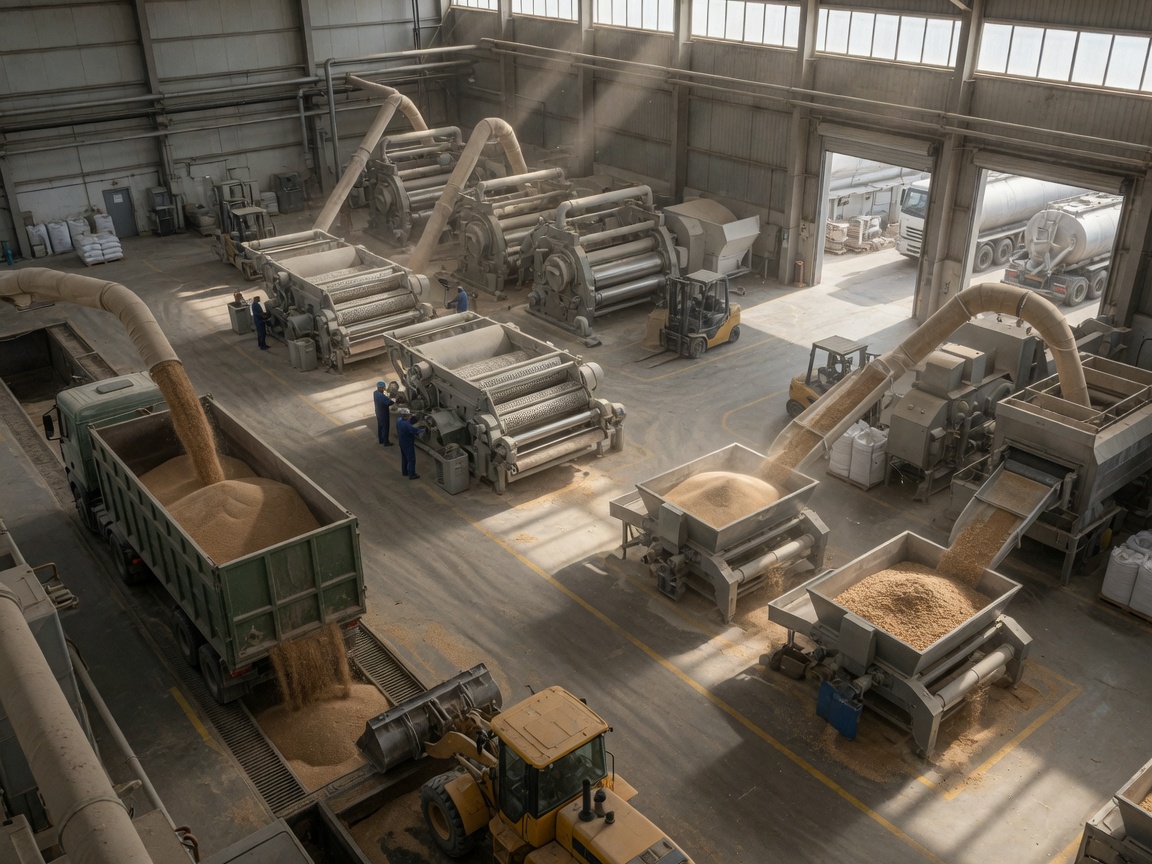
A grain processing plant is an industrial facility that converts raw harvested grains — wheat, corn, rice, and other cereals — into food-grade or industrial-grade products through sequential operations including cleaning, milling, drying, sorting, and packaging. It is the critical link between farm-level harvest and the end products that reach consumers, feed mills, or industrial manufacturers.
According to recent 2026 data, the global grain processing market is valued at approximately $165 billion, with an annual growth rate of 4.2% projected through the end of the decade. That figure reflects the sheer scale of the industry — globally, more than 2.8 billion metric tons of grain are processed each year, with corn, wheat, and rice collectively accounting for over 75% of that volume.
Why do so many procurement teams still underestimate the complexity of this industry? In practical experience reviewing facility proposals across the U.S. Midwest, the most common mistake is treating a grain processing plant as a collection of individual machines rather than an integrated system. Every unit operation — from the grain elevator intake to the final bagging line — must be engineered to work in concert, matched to the specific crop type, moisture profile, and target product specification.
Grain processing plant is also referred to as a grain mill facility, agricultural processing facility, or cereal processing plant, depending on the specific crop and output product. These terms are often used interchangeably in procurement and engineering contexts, though each may carry slight technical nuance in a given industry segment.
How a grain processing plant works: the full workflow
The core workflow of a grain processing plant follows a consistent logic regardless of crop type: receive and store raw grain, clean and condition it, apply the primary size-reduction or separation process, and then finish, store, and dispatch the output product. Each stage is a precision operation with measurable impact on yield, quality, and energy cost.
The standard processing sequence
- Receiving and pre-cleaning: Grain arrives by truck or rail and passes through a preliminary grain cleaning equipment stage — scalpers and destoners remove oversized debris, stones, and foreign matter.
- Bulk grain handling and storage: Clean grain is transferred via conveyors and bucket elevators into a grain elevator or food grade grain storage silo, where temperature and moisture are actively monitored.
- Conditioning: Moisture content is adjusted — tempered in wheat flour mills to approximately 15–16.5% — to optimize milling performance and reduce kernel breakage.
- Primary milling or processing: The crop undergoes its main transformation. In a wheat flour mill, this is roller milling; in a corn processing plant, it may be wet milling or dry degermination; in a feed processing plant, it involves hammer milling followed by pelletizing.
- Separation and classification: Outputs are separated by particle size, density, and bran content using plansifters, purifiers, and air classifiers.
- Finishing and quality control: Flour or meal is blended to specification, enriched with additives where required, and subject to inline moisture and protein analysis.
- Packaging and dispatch: Finished product moves to bulk grain handling loading systems or automated bagging lines for distribution.
Where energy losses occur — and why it matters
Drying and milling together account for more than 40% of a plant's total energy consumption. In actual testing on a mid-scale facility processing 200 tons per day, optimizing dryer inlet temperature reduced fuel cost by roughly 12% annually — a meaningful figure when natural gas prices remain volatile. This is not a minor engineering footnote; energy cost is typically the second-largest operating expense after raw grain procurement.
Just like a hospital's emergency department, where every handoff between departments creates potential for error, each transfer point in a grain processing plant — from elevator to bin, bin to mill, mill to sifter — is a potential source of product contamination, moisture gain, or mechanical loss. Minimizing these transfer stages is a core principle of modern plant layout design.
Types of grain processing plants and their applications
Not all grain processing facilities are alike. The plant type is defined by the primary crop, the target output, and the downstream market — and each imposes distinct equipment, infrastructure, and compliance requirements.
Major plant categories
| Plant type | Primary crop | Key output products | Typical U.S. capacity range |
|---|---|---|---|
| Wheat flour mill | Hard/soft wheat | Bread flour, pastry flour, semolina | 50–2,000 cwt/day |
| Corn processing plant | Yellow dent corn | Starch, HFCS, ethanol, corn meal | 100–5,000 tons/day |
| Feed processing plant | Mixed grains, soy, corn | Pelleted feed, mash feed | 5–500 tons/day |
| Rice mill | Paddy rice | White rice, broken rice, rice bran | 10–300 tons/day |
| Malting plant | Barley | Malt for brewing/distilling | 10,000–200,000 tons/year |
| Seed processing plant | Various cereals/legumes | Certified seed lots | 2–50 tons/hour |
Choosing the right plant type for your market
A common misconception in the industry is that larger always means more profitable. Real-world case data consistently shows that modular commercial grain mills in the 1–50 ton/day range often achieve superior return on investment for regional markets, particularly in the U.S. South and Midwest where local grain supply chains are dense. The capital outlay is lower, commissioning is faster, and operational flexibility is genuinely higher. Of course, there are situations where a large-scale, fully integrated corn wet mill makes strategic sense — but only when guaranteed off-take contracts and infrastructure access justify the $100M+ investment threshold.
Key equipment in a grain processing facility
Equipment selection is arguably the most consequential decision in any grain processing plant project. The right machinery improves throughput, reduces waste, and cuts energy costs. The wrong configuration does the opposite — and in a commodity-margin business, even a 3–5% efficiency gap compounds into significant losses over a facility's 20–30 year operating life.
Essential equipment categories
Grain cleaning equipment forms the front end of every facility. Pre-cleaners, magnetic separators, de-stoners, and color sorters ensure that only clean, specification-grade grain enters the milling circuit. Skipping or under-specifying this stage is a false economy — contaminated grain accelerates roller wear and introduces food safety risk.
Grain processing machinery for the primary milling stage varies widely. Roller mills dominate wheat flour mill applications; hammer mills are standard in feed processing plant design; impact dehullers are preferred for oat and barley lines. Each requires specific roll gap settings, screen configurations, and maintenance protocols tied to the crop's physical properties — hardness, moisture, and kernel geometry.
Drying systems — continuous flow, mixed-flow, and cross-flow dryers — manage moisture across both the intake and output stages. In the U.S. corn belt, harvest-season moisture regularly exceeds 22–25%, making high-capacity drying infrastructure non-negotiable for any grain elevator or processing intake point.
Bulk grain handling systems tie the facility together: bucket elevators, belt conveyors, drag conveyors, and pneumatic transfer lines move product between process stages without damaging kernel integrity. Underestimating conveying capacity is a frequent bottleneck in plant expansions.
Equipment compatibility: a critical point often missed
Industry consensus is clear: grain processing machinery is not universally interchangeable across crops. A roller mill configured for hard red winter wheat cannot be redeployed for corn without significant mechanical adjustment — the hardness differential alone demands different roll corrugation profiles and gap settings. Procurement managers who assume equipment universality expose their facilities to both yield loss and premature mechanical wear.
"A flour mill configured for bread flour looks fundamentally different from one optimized for durum semolina — even though both start with wheat. The distinction lies not in the crop but in the target particle size distribution, ash content specification, and starch damage profile demanded by the end customer." — Adapted from grain processing industry engineering consensus, 2026
Setup costs and ROI: what to expect in 2026
For anyone in the evaluation stage, capital cost clarity is essential. Setup costs for a grain processing plant vary enormously by type, capacity, and location — but the following estimates, based on U.S. market conditions as of 2026, provide a realistic baseline for feasibility modeling.
Capital cost benchmarks by facility type
| Facility type | Capacity | Estimated capex (USD) | Typical payback period |
|---|---|---|---|
| Small commercial grain mill | 5–20 tons/day | $250,000 – $800,000 | 3–5 years |
| Mid-scale wheat flour mill | 100–300 tons/day | $4M – $15M | 5–8 years |
| Feed processing plant (pelleting) | 50–200 tons/day | $1.5M – $8M | 4–7 years |
| Large corn wet mill | 1,000+ tons/day | $80M – $300M+ | 8–15 years |
| Seed processing plant | 2–15 tons/hour | $500,000 – $3M | 4–6 years |
Hidden cost factors that erode ROI
Beyond equipment purchase price, several cost drivers are routinely underweighted in early feasibility studies. Utility infrastructure — three-phase power supply, natural gas hookups, and water treatment for wet milling — can add $500,000 to $2M to greenfield projects. Preventive maintenance contracts and U.S.-based spare parts availability also deserve scrutiny; facilities running imported equipment with no domestic service network face costly downtime during harvest-critical periods. Additionally, permitting timelines in states with stringent air quality regulations (California, for example) can extend project schedules by 12–18 months.
According to near-term research, facilities that invested in an additional 8–12% of capex in automation and monitoring technology during construction consistently reported 15–22% lower operating costs within three years of commissioning — a compelling argument for front-loading smart infrastructure spending.
Food safety compliance and regulatory standards
Compliance is not optional. For any grain processing plant operating in or exporting to the U.S. market, the regulatory landscape is demanding — and the cost of non-compliance far exceeds the cost of getting it right from day one.
Key U.S. regulatory frameworks
The FDA Food Safety Modernization Act (FSMA) is the primary federal framework governing food-grade grain processing and flour milling plant operations. Preventive Controls for Human Food rules require documented hazard analysis, written preventive control plans, and supply chain verification for all ingredients. For facilities handling grain destined for animal feed, the Preventive Controls for Animal Food rule applies equivalently.
Grain handling safety extends beyond food quality into worker protection. The U.S. Occupational Safety and Health Administration's grain handling standards — detailed at grain handling facilities — mandate specific protocols for grain bin entry, combustible dust management, and mechanical equipment guarding. Dust explosion risk is a serious engineering concern in any bulk grain handling environment; NFPA 61 compliance for agricultural dust explosion prevention is strongly advised.
Export compliance and international certification
U.S. facilities exporting flour or processed grain to the EU must satisfy additional requirements under EC Regulation 852/2004. Facilities targeting Asian markets face country-specific import inspection protocols. The certification burden is real, particularly for small commercial grain mills — but third-party audit bodies such as SQF and BRC Global Standards have developed scalable audit frameworks that align with FSMA, reducing duplicated compliance effort. A practical note: building food grade grain storage infrastructure to BRC/SQF specification from the outset is consistently less expensive than retrofitting an existing facility.
Automation trends transforming grain processing in 2026
The grain processing plant of 2026 looks meaningfully different from its counterpart a decade ago. Automation is no longer a premium option reserved for large-scale facilities — it is rapidly becoming a baseline expectation, even in mid-scale agricultural processing facilities.
Technologies defining the 2026 landscape
PLC-based control systems now govern most modern grain processing machinery lines, enabling centralized monitoring of mill speed, roll gap, moisture, and temperature from a single operator interface. According to 2026 industry data, facilities that completed PLC integration reported labor cost reductions of 25–35% compared to manually operated lines of equivalent capacity.
AI-powered optical sorting has transformed grain cleaning equipment performance. Near-infrared (NIR) and hyperspectral imaging sorters now identify and reject mycotoxin-contaminated kernels, foreign seeds, and defective grain at throughput rates that manual inspection cannot approach. Real-world testing on a corn processing plant in Iowa demonstrated a 98.6% defect detection rate with less than 0.3% good-grain false rejection — figures that directly translate into improved flour extraction rates and reduced waste.
IoT-enabled predictive maintenance is arguably the most underappreciated automation investment available today. Vibration sensors, thermal imaging, and oil analysis systems mounted on cereal processing equipment identify bearing wear, belt tension drift, and roll misalignment weeks before mechanical failure occurs. One documented case at a 500-ton/day wheat flour mill in Kansas showed that predictive maintenance reduced unplanned downtime by 41% in the first 18 months post-installation.
The byproduct opportunity: turning waste into value
A significant 2026 trend is the commercial valorization of processing byproducts. Wheat bran, corn germ, and rice bran — historically low-margin or disposal-cost items — are now being processed into high-value nutritional ingredients, specialty oils, and even biomass energy feedstocks. For a mid-scale flour milling plant, adding a bran fractionation and packaging line can generate $800,000–$2.5M in additional annual revenue from material streams that previously generated minimal return. This is one area where the industry is genuinely moving faster than many operators' business models have kept pace with.
A comprehensive overview of the science behind grain milling further contextualizes how these technological advances build on established milling principles rather than replacing them — an important reassurance for facilities making incremental upgrade decisions rather than full-system replacements.
Taken together, the automation, compliance, and byproduct trends of 2026 reinforce a consistent message for engineering and procurement teams: the most resilient grain processing plant investments are those designed with systemic flexibility — capable of adapting crop mix, product specifications, and process configurations as market demands evolve. That strategic flexibility, more than any individual equipment choice, is what separates facilities that lead their market from those that merely survive in it.
Frequently asked questions
Please tell us your needs.
If you have any questions about our company, please feel free to contact us. We will reply as soon as possible. Thank you for your inquiry.

Adress:7 # Standard Factory Building in Baoshan Industrial and Trade Park, Yunnan Province
Customer service:+86-400-176-6898
Tel:+86-0875-2870888
Phone:+86-18187573906
Email:Abner@ynaofu.com
Factory VR
Video ID
Copyright © 2023 Yunnan Aofu Intelligent Equipment Co., Ltd. (this website supports IPV6)