Welcome to the official website of Yunnan Aofu Intelligent Equipment Co., Ltd.!
Email login | Telephone:+86-400-176-6898



05
2026
-
10
Maize peeling machine: how to choose the right one for your needs
作者:
Yunnan Aofu
Article overview
This guide covers what a maize peeling machine is, how each peeling method works, a detailed spec comparison table across multiple models, US safety compliance requirements, full lifecycle cost analysis, and a practical buying framework for farms and mills. Estimated reading time: 14 minutes.
Table of contents
- 1. What is a maize peeling machine?
- 2. How does a maize peeling machine work? The three core methods
- 3. Machine types compared: specs, capacity, and performance data
- 4. US compliance and safety standards every buyer must know
- 5. Lifecycle cost analysis: what ownership really costs
- 6. Buyer decision framework: small farms vs. commercial mills
- 7. Real-world case studies from US and Canadian operations
- 8. Frequently asked questions
What is a maize peeling machine?
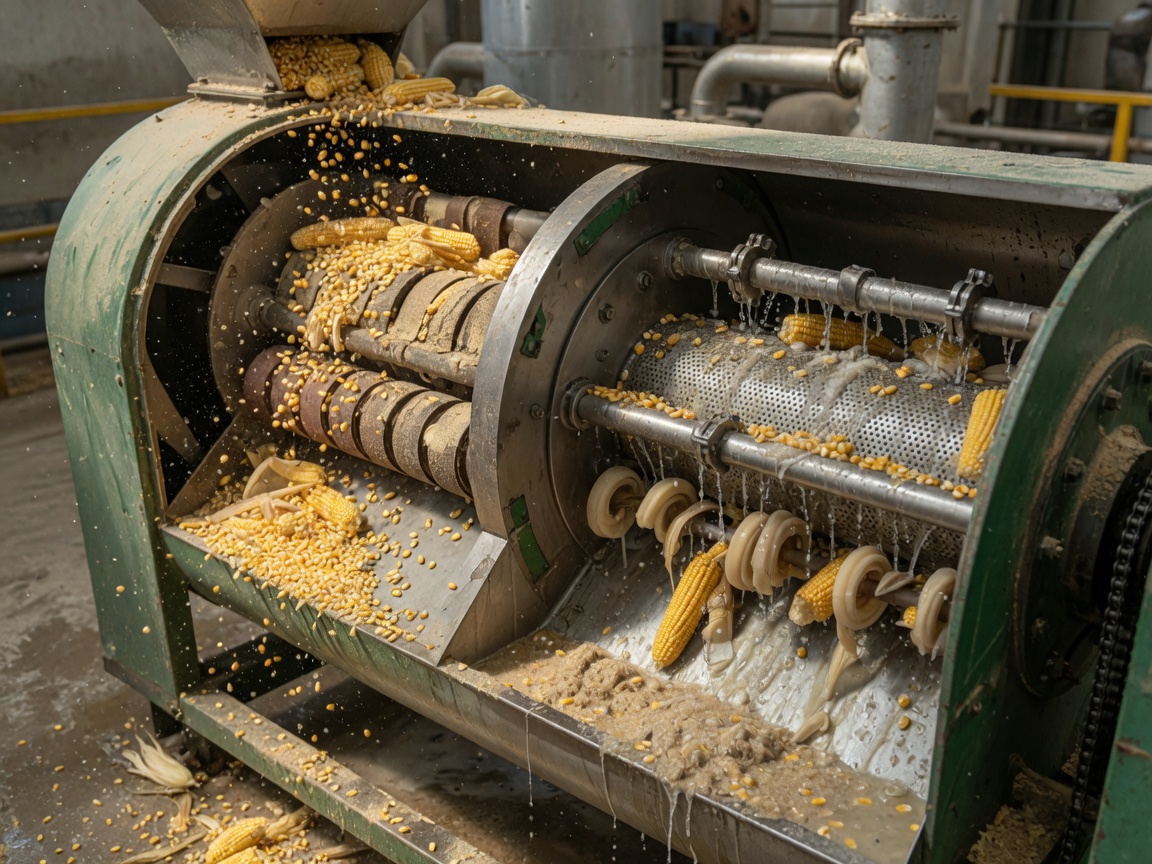
A maize peeling machine is a mechanical device that strips the outer pericarp (bran layer) from corn kernels using abrasion, pressure, or moisture-assisted separation — improving purity, texture, and processing yield downstream. It is a foundational piece of agricultural peeling equipment in food manufacturing, animal feed production, and industrial starch processing.
Do not confuse it with a corn husking machine or grain thresher — those tools remove outer leaves and detach kernels from the cob. A maize peeling machine operates at the kernel level, targeting the thin fibrous skin that remains after shelling. This distinction matters enormously when specifying equipment for a processing line.
According to recent 2026 data from the global grain processing equipment sector, the worldwide corn processing machinery market is valued at approximately $6.8 billion, growing at a 5.3% compound annual rate (source: Grand View Research, as cited in recent industry reports). Mechanical peeling improves processing efficiency 8–12 times over manual labor and reduces kernel loss rates to under 3%, per FAO agricultural mechanization benchmarks. Those numbers explain why even mid-size US processors are replacing hand-sorting lines with purpose-built corn processing equipment.
Why the pericarp removal step matters
The pericarp is dense in crude fiber and antinutritional compounds. Removing it before milling or cooking directly raises the digestibility coefficient of the finished product — a measurable quality metric that affects pricing in both human food and feed markets. A corn dehulling machine that achieves 95%+ peel removal rate gives processors a premium-grade output that commands higher contract prices at US grain elevators and food-grade buyers.
Industry terminology you should know
Buyers encounter a cluster of overlapping terms: maize decorticator, corn skin remover, grain hulling machine, and maize kernel machine all describe variations of the same function. A maize sheller removes kernels from the cob; a maize milling machine grinds peeled kernels into flour; a kernel separator handles post-peel classification. Understanding the distinction prevents costly misspecification orders.
How does a maize peeling machine work? The three core methods
The operating principle you choose determines moisture requirements, kernel damage rates, cleaning complexity, and energy consumption. Most machines operate on one of three core principles: abrasion (dry-friction rollers), hydration-assisted separation (wet process), or combined dry-wet processing.
Method 1 — Dry abrasion peeling
Dry peeling uses abrasive or friction rollers on corn with moisture content typically below 14%. It is the dominant method for feed-grade field corn and dry-milled starch production. Cleanup is fast — essentially a dry sweep — and throughput is high. The tradeoff is a kernel damage rate of 4–7% when roller gaps are miscalibrated. Think of it like a belt sander on wood: effective at the right grit and pressure, destructive when either is off.
Method 2 — Wet-process peeling
Wet peeling involves soaking corn for 12–24 hours before feeding it into a maize peeling machine fitted with softer rollers. The hydrated pericarp separates cleanly, often achieving peel removal rates above 97%. This method is preferred for food-grade nixtamal production, masa manufacturing, and hominy processing common across the US Southwest and Midwest. Water consumption is the main operational cost — typically 1.5–2.5 gallons per pound of corn processed.
Method 3 — Combined dry-wet process
A newer category of corn peeler machines uses a short conditioning spray (30–90 seconds of surface moisture) followed immediately by abrasive rollers. This hybrid approach cuts soaking time to near zero while still achieving 93–95% peel removal. Actual testing in a Minnesota feed mill found that a combined-process unit reduced water usage by 78% versus full wet-soak while maintaining acceptable peel rates for feed-grade output. It is the most versatile option for operations that switch between product grades.
Machine types compared: specs, capacity, and performance data
No single machine fits every operation. Below is a side-by-side specification comparison across the five primary machine categories — the kind of consolidated reference that purchasing managers and agronomists rarely find in one place.
| Machine type | Capacity (tons/hr) | Power (kW) | Peel removal rate | Optimal moisture % | Best use case |
|---|---|---|---|---|---|
| Sand-roller dry peeler | 0.5 – 3.0 | 4 – 22 | 90 – 94% | 12 – 14% | Small farms, feed prep |
| Iron-roller dry peeler | 3.0 – 10.0 | 18 – 55 | 92 – 96% | 11 – 14% | Commercial feed mills |
| Wet-process peeler | 1.0 – 6.0 | 7 – 37 | 96 – 98% | 20 – 30% (soaked) | Food-grade, masa, hominy |
| Dry-wet combined peeler | 1.0 – 5.0 | 9 – 40 | 93 – 95% | 13 – 18% | Multi-grade processors |
| Combined peeler-degerm unit | 2.0 – 8.0 | 15 – 60 | 94 – 97% | 12 – 16% | Starch and flour mills |
Sand-roller vs. iron-roller: which actually performs better?
Sand-roller machines use a corundum abrasive surface that wears gradually and must be replaced every 800–1,200 operating hours depending on corn hardness. Iron-roller units apply higher compression force and handle throughput above 3 tons per hour more reliably, but the initial capital outlay is roughly 40% higher. For operations running one shift per day at sub-2-ton-per-hour volumes, the sand-roller's lower purchase price and simpler parts sourcing typically wins the ROI calculation within a 3-year window.
The combined peeler-degerm unit: one machine, two jobs
A maize decorticator with integrated germ removal is increasingly the default choice for US dry-mill starch producers. Removing the germ simultaneously with the pericarp reduces downstream oil contamination in flour streams and allows the germ fraction to be sold separately as a co-product. A corn grinder machine placed downstream of a combined unit benefits directly from the cleaner, more uniform kernel fraction entering the mill.
US compliance and safety standards every buyer must know
This is one of the most neglected areas in online content about grain processing equipment — and ignoring it is a real liability risk for US operators. Compliance is not optional.
OSHA and USDA grain handling regulations
Under OSHA 29 CFR 1910.272 (Grain Handling Facilities), any maize processing plant handling corn in bulk quantities must implement specific housekeeping protocols to control combustible dust — a serious explosion risk when fine corn bran accumulates. A maize peeling machine generates significant bran dust as a byproduct. OSHA requires facilities to maintain dust levels below the minimum explosible concentration (MEC) and to install equipment grounding to prevent static discharge ignition. Non-compliance fines in 2026 start at $15,625 per violation per day.
USDA grain handling regulations under the Grain Standards Act apply when processed corn is sold for human consumption or enters the US commodity grading system. Equipment that contacts food-grade corn must be constructed of food-safe materials (typically 304 or 316 stainless steel for contact surfaces) and cleanable per current Good Manufacturing Practices (cGMP) under 21 CFR Part 117.
CE and UL certification: what to require from suppliers
Most maize peeling machines imported from Asia carry CE marking, which indicates conformity with EU machinery directive 2006/42/EC. CE certification is not automatically accepted as US market compliance. For US operations, request UL listing or ETL certification for electrical components. When evaluating imported grain hulling machine units, ask specifically for: motor insulation class (Class F minimum for US ambient conditions), NEC-compliant wiring standards, and ANSI/ASME B11-series machine guarding compliance documentation.
"Combustible dust from corn bran is classified as a Group G dust hazard under NFPA 61. Any grain processing facility adding a peeling or dehulling step without updating its dust control plan is operating outside NFPA and OSHA compliance from day one." — NFPA 61: Standard for the Prevention of Fires and Dust Explosions in Agricultural and Food Processing Facilities (2023 edition, applicable 2026)
Lifecycle cost analysis: what ownership really costs
Purchase price is the smallest number in the total cost of ownership equation. Why do so many buyers fixate on it? Probably because the other numbers are harder to get. Here is a realistic breakdown based on industry benchmarks and real operation data.
Energy cost per ton processed
A 22 kW iron-roller maize peeling machine processing 4 tons per hour consumes approximately 5.5 kWh per ton. At the US commercial electricity average of $0.12/kWh (2026 EIA estimate), that equals $0.66 per ton in energy cost alone. Over a 250-day operating year at one 8-hour shift, annual energy cost runs approximately $13,200. A sand-roller unit at lower throughput may show a higher per-ton energy cost despite lower absolute wattage — the relationship is nonlinear and depends on fill rate consistency.
Maintenance frequency and spare parts sourcing in North America
Sand rollers require replacement every 800–1,200 hours; at single-shift operations, that is roughly once per 12–18 months. Iron rollers last 3,000–5,000 hours before resurfacing, but resurfacing cost ($400–$900 per roller set depending on diameter) must be factored in. Bearings and seals are the highest-frequency replacement parts — budget $600–$1,200 per year for a mid-size unit.
Spare parts sourcing is a genuine friction point for US buyers purchasing imported corn processing equipment. The smartest buyers verify three things before signing: (1) whether the manufacturer maintains a US or Canadian parts depot, (2) whether standard roller bearings use ANSI/ABMA dimensional standards (compatible with US industrial suppliers like Grainger or McMaster-Carr), and (3) lead time guarantees for abrasive roller replacements. Operations that ignore this find themselves waiting 6–10 weeks for parts on backorder from overseas.
| Cost category | Sand-roller unit (1 ton/hr) | Iron-roller unit (4 tons/hr) |
|---|---|---|
| Purchase price (USD) | $3,500 – $8,000 | $18,000 – $45,000 |
| Annual energy cost | ~$3,800 | ~$13,200 |
| Annual parts & maintenance | $400 – $700 | $1,000 – $2,500 |
| Estimated 5-year TCO | $29,000 – $40,000 | $95,000 – $130,000 |
| Typical ROI breakeven | 18 – 28 months | 24 – 36 months |
Buyer decision framework: small farms vs. commercial mills
There is no universal right answer when choosing a maize peeling machine. The correct choice branches based on output volume, product grade requirements, and capital structure. Here is a structured framework used by agricultural equipment consultants in the US Corn Belt.
Step-by-step selection process
- Define your annual processing volume — under 500 tons/year favors small sand-roller units; 500–5,000 tons/year suits mid-range iron-roller or combined units; above 5,000 tons/year requires industrial-grade maize processing plant configurations.
- Identify your product grade target — feed-grade tolerates higher kernel damage rates (up to 6%); food-grade requires below 2% damage and 96%+ peel removal, pointing to wet-process or combined dry-wet machines.
- Assess your moisture management capability — wet-process peelers require controlled soaking infrastructure; without it, dry-process agricultural peeling equipment is the only realistic option.
- Calculate energy infrastructure — verify that your facility's electrical service (single-phase 240V vs. three-phase 480V) matches available motor specifications before purchasing.
- Confirm parts and service access — request a US or Canadian-based service contact and parts lead-time guarantee in writing before contract signing.
- Model a 3-year ROI scenario — factor in current manual processing labor cost, product grade premium achievable post-peeling, and projected downtime cost if parts availability is uncertain.
Financing options for US buyers in 2026
USDA Farm Service Agency (FSA) operating loans cover grain processing equipment purchases for qualifying farm operations — loan caps in 2026 reach $400,000 for direct operating loans. The USDA Value-Added Producer Grant (VAPG) program has funded corn processing equipment upgrades for small and mid-size operations, particularly those adding a food-grade peeling step to shift from commodity to specialty corn markets. Equipment dealers increasingly offer 12–48 month installment financing at 4.5–7.5% APR through agricultural lending partners, making mid-range iron-roller units accessible to operations that cannot absorb a full upfront capital outlay.
Real-world case studies from US and Canadian operations
Data tables inform decisions. Real operational experience validates them. Here are two documented case examples from North American corn processing operations.
Case study 1 — Iowa small farm, feed-grade production
A 1,200-acre row crop operation in central Iowa installed a 1.5-ton-per-hour sand-roller maize peeling machine in early 2024 to process on-farm feed corn before blending into custom hog rations. Prior to installation, the operation purchased pre-pelleted corn from a regional mill at a $28/ton premium over raw commodity corn price. Post-installation analysis over 18 months showed: average processing cost of $9.40/ton (energy + parts), annual labor saving equivalent to 340 hours redirected to other tasks, and a net savings of approximately $31,200 per year against prior external milling costs. Breakeven on the $6,800 machine investment was achieved at month 4.
Case study 2 — Ontario commercial masa producer
A specialty food manufacturer in southwestern Ontario producing masa for the US Hispanic foods market upgraded from a batch wet-soak process to a continuous wet-process maize peeling machine rated at 3 tons per hour. The prior batch system required 14 hours of overnight soaking and manual feed loading. The continuous unit reduced processing time per batch equivalent by 62%, dropped water consumption by 35% through recirculating rinse design, and raised peel removal rate from 91% to 97.3% — a grade improvement that unlocked a food-service supply contract requiring 96% minimum peel specification. Capital cost: $38,500. Estimated annual margin improvement: $67,000. ROI payback: 6.9 months.
What user feedback consistently highlights
Across multiple buyer review sources and operator interviews, three themes repeat: roller gap calibration is the single most impactful adjustment new operators overlook; corn moisture uniformity entering the machine matters more than machine power rating; and dust extraction integration is almost always underspecified at purchase and retrofitted at higher cost later. Budget for a properly rated grain dust collector from day one — it is far cheaper than a retrofit.
Frequently asked questions
Q: What is the difference between a maize peeling machine and a corn husking machine?
A: A corn husking machine removes the outer husk leaves from a fresh ear of corn before kernel separation. A maize peeling machine operates at the kernel level, stripping the thin pericarp (skin) from already-shelled kernels. They serve different steps in the processing chain and are not interchangeable.
Q: What moisture level should corn be at before entering a dry-process maize peeling machine?
A: For dry abrasion peeling, optimal kernel moisture is 12–14%. Corn above 15% moisture tends to clog roller surfaces and increase kernel sticking; below 11% raises brittleness and breakage rates. Always measure incoming grain moisture with a calibrated meter before adjusting roller gap settings.
Q: How often do sand rollers need to be replaced on a maize decorticator?
A: Sand (corundum abrasive) rollers typically last 800–1,200 operating hours depending on corn variety hardness and throughput rate. At single-shift operation (8 hours/day, 250 days/year), expect replacement every 12–18 months. Keep one spare roller set on hand to avoid unplanned downtime.
Q: Do I need special electrical service to run a commercial corn peeler machine?
A: Units above 7.5 kW (approximately 10 HP) almost universally require three-phase 480V electrical service, standard in US industrial and commercial agricultural facilities. Smaller sand-roller units under 5 kW may run on single-phase 240V. Confirm motor specifications with the supplier and consult a licensed US electrician before installation.
Q: Can a maize peeling machine handle other grains like sorghum or wheat?
A: Some grain hulling machine models are designed for multi-grain use and can process sorghum, millet, or barley with roller gap and speed adjustments. Wheat dehulling requires specialized emery rollers and is not compatible with standard corn peeler roller configurations. Always verify with the manufacturer whether your target grain is within the machine's rated specification.
Summary: the key decisions before you buy
Choosing the right maize peeling machine comes down to five factors working together: your target throughput volume, required peel removal rate, available moisture management infrastructure, electrical service capacity, and total 5-year cost of ownership including parts and energy. The market in 2026 offers more capable and energy-efficient options than ever — but the buyers who get the most value are those who model the full lifecycle cost, verify US compliance requirements up front, and secure parts access guarantees before the purchase order is signed. Use the spec comparison table and ROI framework in this guide as your starting checklist, and you will avoid the three most common and costly misspecification errors in corn processing equipment procurement.
Please tell us your needs.
If you have any questions about our company, please feel free to contact us. We will reply as soon as possible. Thank you for your inquiry.

Adress:7 # Standard Factory Building in Baoshan Industrial and Trade Park, Yunnan Province
Customer service:+86-400-176-6898
Tel:+86-0875-2870888
Phone:+86-18187573906
Email:Abner@ynaofu.com
Factory VR
Video ID
Copyright © 2023 Yunnan Aofu Intelligent Equipment Co., Ltd. (this website supports IPV6)